What is a hearing test?
A hearing test is a painless 15 to 30 minute checkup that measures exactly how well you hear across every pitch. Here is what happens on the day, the four tests an audiologist might run, what each one costs, and how to read the chart it produces.
Akriti Kumar, Audiologist
6 min read
A quick self check
Have you ever
Tap the ones that sound like you.
Nothing ticked. Worth a baseline anyway once you are past 40, the same way you check your eyes.One is enough to be worth half an hour of your time.Two of these usually travel together. A test will tell you what is actually going on.That is a clear pattern. The good news is that a test is quick, painless and tells you exactly where you stand.
None of these mean you have hearing loss. They mean it is worth finding out instead of guessing.
What a hearing test actually is
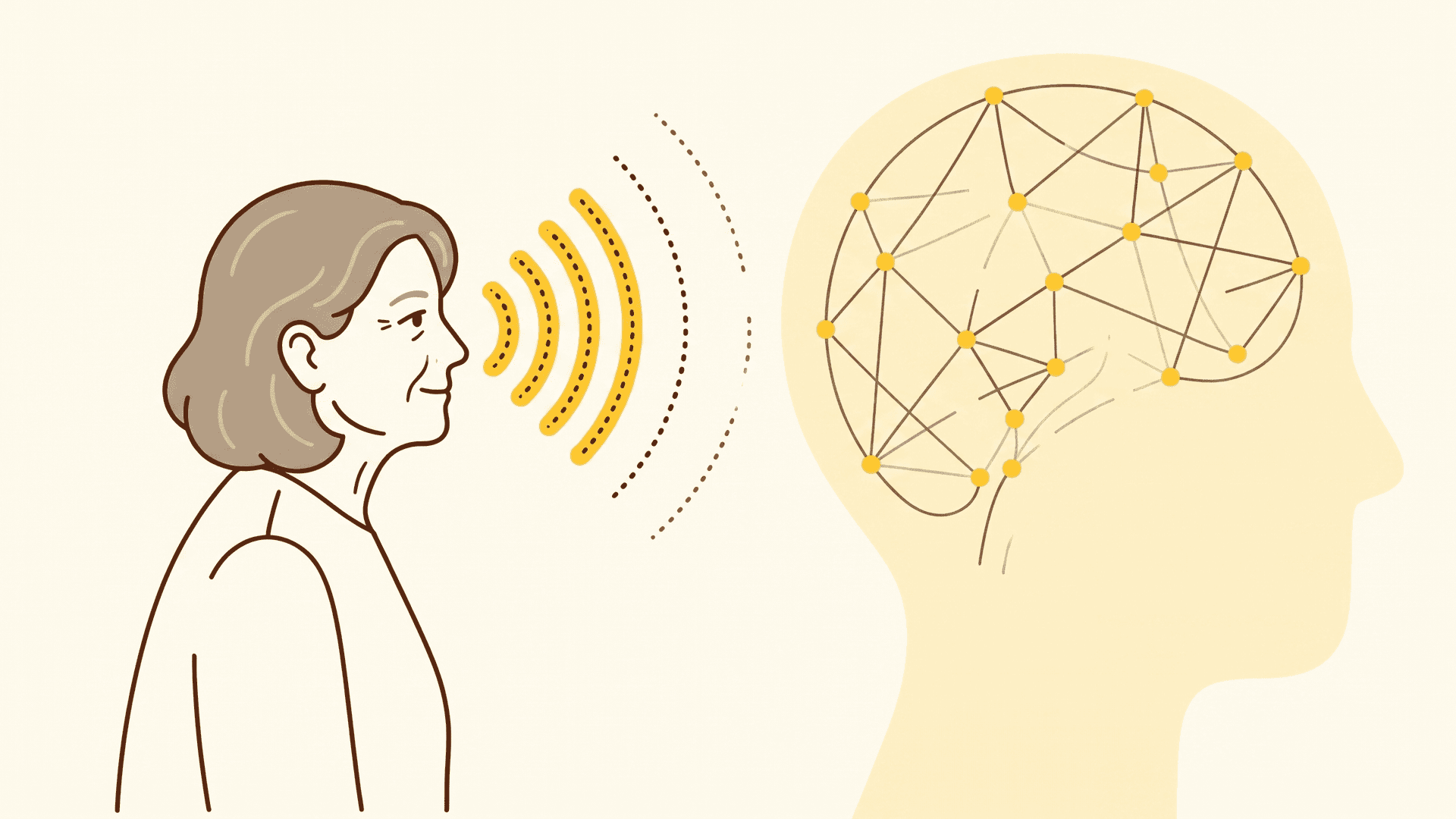
A hearing test is a checkup, not a procedure. You sit in a quiet room, wear a pair of headphones, and press a button every time you hear a tone. Some of those tones are so soft you will wonder whether you imagined them. That is the point.
15 to 30 minutes
Start to finish, including the conversation after.
Completely painless
Nothing enters your ear. Nothing is injected.
Run by an audiologist
A trained clinician, not a machine on its own.
By the end, your audiologist knows three things you cannot work out on your own:
- How well you hear across the whole range of pitches, from a low hum to a high whisper.
- Whether you are hearing sound but missing the clarity of speech, which are two different problems.
- Whether there is a loss you have quietly adapted to over years without noticing.
What the test draws
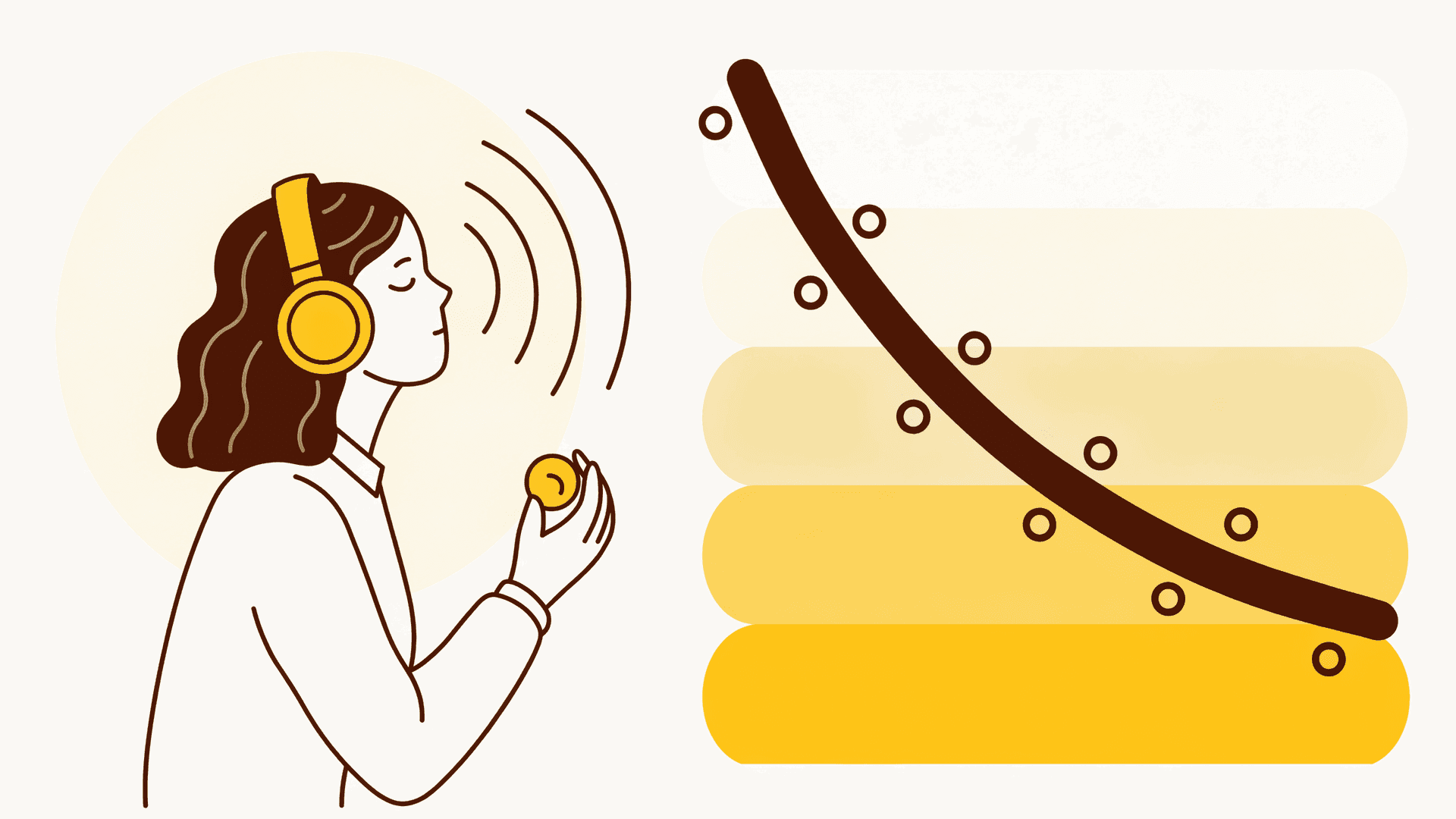
Everything the test measures ends up on one chart, called an audiogram. It is worth understanding, because it is the single document that decides what happens next.
Pitch runs left to right, from the low rumble of a fridge to the hiss at the top of a cymbal. Loudness runs top to bottom: the further down the chart your result sits, the louder a sound has to be before you hear it.
Read your own audiogram with our free tool
The shaded shape in the middle is where ordinary speech lives. Every conversation you have ever had happened inside it.
Look at where the example result crosses out of that shape on the right. Vowels are low and loud, so they stay comfortably inside. Consonants like s, f and th are high and quiet, so they are the first to fall out. That is the reason a TV can be plenty loud and the words still refuse to land, and it is why turning up the volume never quite fixes it.
How far the line drops puts you in one of four bands. They are the same four the entire Synva catalogue is sorted by:
A device that says mild to moderate genuinely cannot carry a severe loss, however good it is or however much it costs. That one line on a chart is what turns a recommendation into something honest instead of a guess.
Browse hearing aids by what they can carry
The tests we run, and what each costs
Depending on what you came in with, your audiologist may run one of these or a few. Nobody runs all four for the sake of it.
Pure tone audiometryPTA
The one everyone means by a hearing test. Tones at different pitches, quieter and quieter, until you stop hearing them. This is the test that draws your audiogram.
₹500
Speech audiometry
Words instead of tones. It separates hearing a sound from understanding it, which is the difference between a loud room and a clear one.
Confirmed on the day
Impedance audiometry
Checks how your eardrum and middle ear respond to pressure. It finds the mechanical problems, like fluid or a stiff eardrum, that no amount of volume will fix.
₹1,500
Tinnitus matching
If you have ringing or buzzing, this pins down its pitch and loudness so it can actually be treated rather than tolerated.
₹500
Your audiologist recommends only what your situation needs. For most people that is the first one on its own.
Protecting the hearing you have
Your ears are for life, and they do not grow back what they lose. Most hearing damage is preventable, and the habits that cause it are completely ordinary ones.
The 60/60 rule
Keep headphone volume under 60 percent, and take a break after 60 minutes. Your ears need rest in exactly the way your eyes do.
Never a cotton bud
A bud pushes wax deeper or tears something delicate. Ears clean themselves, and they are good at it. Let them.
Earplugs where it is loud
Concerts, factories, fireworks, a wedding band at close range. A single loud evening can do damage that never reverses.
A test every year after 40
The same routine you already accept for your eyes and your teeth. Even when nothing feels wrong, especially then.
What it feels like at Synva
Say goodbye to cold, clinical rooms. A hearing test should feel like getting your eyes checked, not like being unwell.
No hospital in it
A warm room in Barkatpura, not a corridor and a queue. Hearing care should feel normal, because it is.
No jargon, no rush
We take the time to understand what you are struggling with before we say a single word about devices.
No sales
We will not push a hearing aid at you. If the test says you do not need one yet, that is the answer you get.
Referred by ENTs
Doctors send patients to us, and families send the people they are looking after. Both keep happening.
If getting to Barkatpura is the hard part, an audiologist will come to you anywhere in Hyderabad with everything the test needs.
Common questions
Share
WhatsApp