World Hearing Day 2026: From Communities to Classrooms – Hearing Care for All Children
World Hearing Day 2026 focuses on children: the early signs parents and teachers should watch for, the prevention that avoids most childhood hearing loss, and how classrooms can help.
Akriti Kumar, Audiologist
2 min read
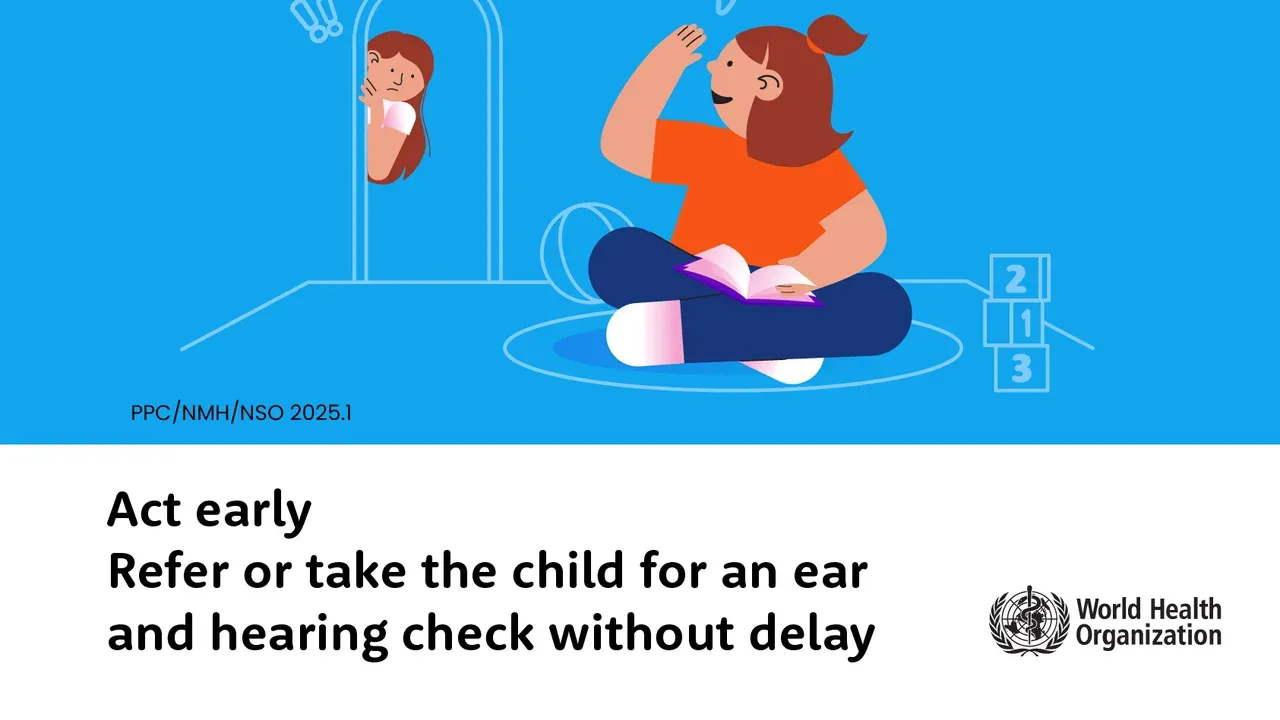
Every year, 3rd of March, observed as the World Hearing Day, World Health Organization brings about a yearly campaign for spreading awareness about hearing, hearing care and hearing loss. This year, WHO's powerful posters highlights practical ways to support friends and children with hearing challenges, urging early action in schools and communities.
Hearing Loss in Children
Around 32 million children worldwide live with disabling hearing loss, often in low- and middle-income countries like India. Hearing is vital for language development, school success, and social bonds; untreated loss leads to speech delays and isolation. WHO notes that 60% of cases are preventable through simple steps.
Signs to Watch For
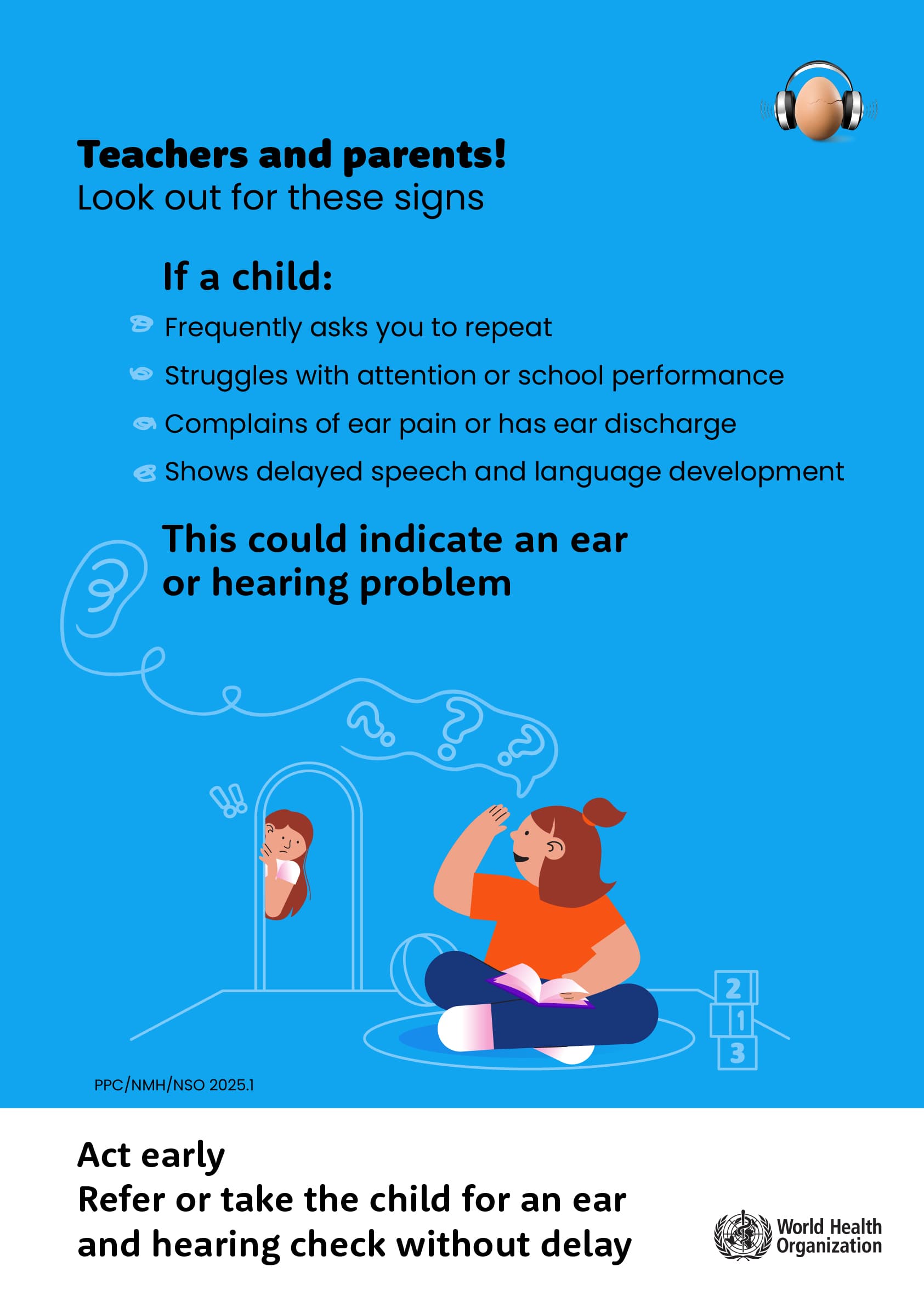
Parents and teachers should spot early red flags in kids, as shown in WHO's posters. These include :
- Frequent requests to repeat words,
- Attention struggles,
- Poor school performance, or
- Delayed speech.
- Ear pain or discharge signals possible infections needing prompt checks.
Preventive Measures
Up to 60% of childhood hearing loss is avoidable with proven strategies. Key actions cover vaccinations against measles, mumps, rubella, and meningitis; safe perinatal care to cut birth complications; hygiene to prevent ear infections; and avoiding ototoxic drugs during pregnancy. Community programs and school screenings integrate these into routine health check up.
Preventive Strategy | How It Helps |
|---|---|
Vaccinations | Blocks infections like rubella causing 31% of cases |
Hygiene practices | Reduces otitis media in schools |
Noise regulation | Protects from loud environments |
Antenatal care | Avoids 17% birth-related losses |
Rehabilitative Measures
Early detection enables interventions like hearing aids for mild-to-moderate loss or cochlear implants for severe cases. Rehabilitation includes speech therapy, consistent device use, and family training in sign language or clear communication. Schools support by seating kids upfront, reducing background noise, and encouraging peer inclusion.
Classroom and Community Support
Here are a few actionable tips:
- Face the child when speaking,
- Include them in activities,
- Speak louder and clearly if needed
- Give them repetitions of words if required
- Never tease about aids.
- Teachers can learn basic sign language and advocate for screenings.
At Synva, we provide fittings, counseling, and awareness sessions tailored for the child and their families.
Call to Action
Act today: screen your child's hearing, support school programs, and visit Synva for expert checks. Together, we ensure every child hears, learns, and thrives.
Share
WhatsApp