
Don’t buy Hearing Aid without understanding your Daily Routine and Lifestyle [Part 2]
Part 2 of Synva’s selection series: match hearing aid features to your daily routine. Three real lifestyles, the features each one actually needs, and the ones that would be wasted.
Akriti Kumar, Audiologist
4 min read
Do you also believe that buying an expensive hearing aid will automatically guarantee better clarity?
If yes, then it’s time to bust that myth. Because even if you buy a ₹1,00,000 hearing aid, you might not actually use half of its premium features if it does not match your day routine.
So, how do you find a hearing aid that truly fits your life (and not just your audiogram or budget)?
Welcome to Part 3 - Step 2 of Synva’s “Hearing Aid Selection Simplified” series — where we’ll help you match your hearing aid features with your lifestyle, so you get the best clarity, comfort, and value for your money.
The 3-Step Framework for Choosing the Right Hearing Aid
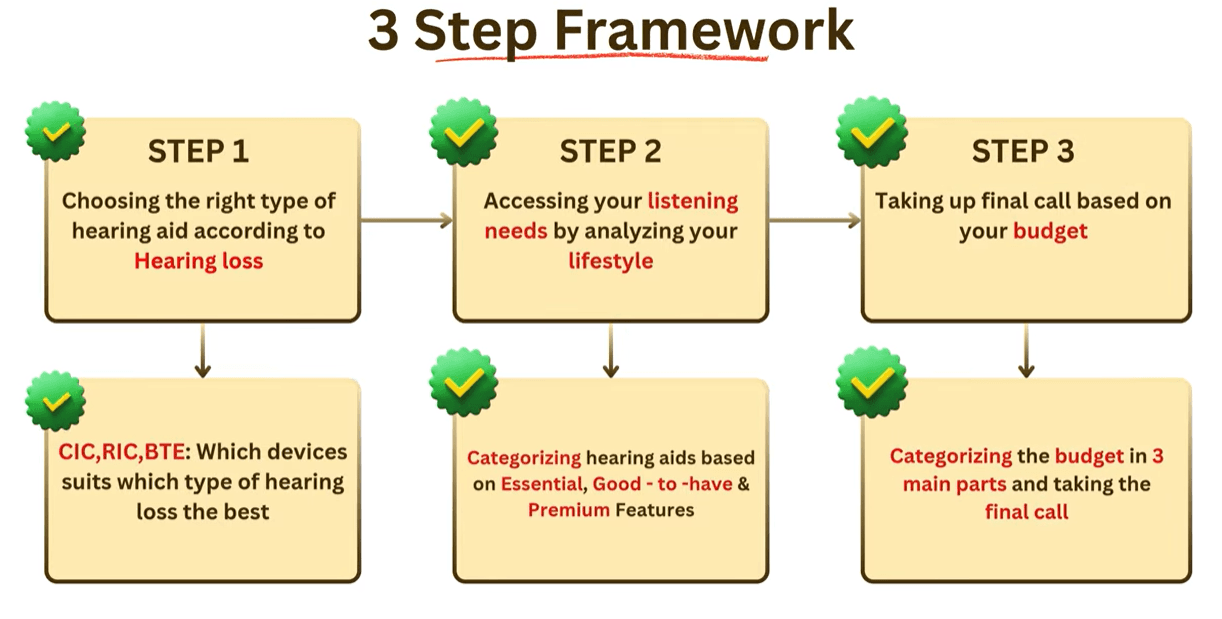
In the previous blog, we introduced our 3-Step Scientific Framework for choosing the perfect hearing aid:
- Choose the Type of Hearing Aid according to your Hearing Loss
- Assess Your Listening Needs by analyzing your Lifestyle
- Take a Final Call depending on your Budget
For a quick recap, read Part 1: choosing by your hearing loss.
In this blog we talk about Step 2: how to choose the right hearing aids based on your lifestyle and listening environments.
Why Lifestyle Matters More Than You Think
Many people pick hearing aids based on price or brand, not on their real-world listening needs. But two people with the same hearing loss can have completely different experiences depending on where and how they spend their day.
Your listening environments, such as quiet rooms, offices, restaurants, or busy outdoors — decide how complex your hearing aid should be.
Here’s the key principle:
“The main goal of every hearing aid is to make speech clearer and reduce noise.”
Every feature, whether it’s noise cancellation, adaptive microphones, or AI, exists to achieve this goal.
A. Understand Your Listening Needs
Let’s meet three people with different lifestyles and listening challenges:
Person | Age & Occupation | Daily Routine | Typical Challenges |
|---|---|---|---|
Mrs. Sharma  | 55 yrs, Working Professional Has Mild Hearing Loss (~35dB) | Office meetings, video calls, travel, social gatherings | Struggles to hear in meetings, noisy restaurants, and phone calls |
Mr. Patel  | 80 yrs, Retired Individual with passive lifestyle Has Severe to Profound Hearing Loss (~100dB) | Stays at home, watches TV, occasional family functions | Finds TV unclear, struggles to hear family conversations |
Mr. Gupta  | 68 yrs, Retired but has Active lifestyle Has Moderate to Severe Hearing Loss (~60dB) | Morning walks, social gatherings, outdoor chats | Difficulty understanding speech in open spaces or during group talk |
Each of these lifestyles demands a different level of hearing aid feature.
B. Know Your Hearing Aid Features
Here are 10 common hearing aid features — divided into three levels: Essential, Good-to-Have, and Luxury (Premium).
Feature | Essential | Good to Have | Premium |
|---|---|---|---|
Channels | 6–8 | 12 | 16+ |
Digital Noise Cancellation | ✅ | ||
Adaptive Microphone Directionality | ✅ | ||
Dynamic Sound Processing | ✅ | ||
AI Noise Cancellation | ✅ | ||
Multi-Stream Architecture | ✅ | ||
Rechargeable Battery | ✅ | ||
Bluetooth Connectivity | ✅ | ||
Feedback Cancellation | ✅ | ✅ | |
Frequency Compression | Depends on high-frequency loss |
Now, let’s see how these features match with our three examples.
Example 1
Lifestyle: Dynamic with varied listening environments
Recommended Features
Essential Features: 12-16 Channels, Digital Noise Cancellation, Adaptive Microphone Directionality, and Feedback Cancellation
Good to Have Features: Dynamic Sound Processing, Rechargeability, Bluetooth
Premium Features: AI Noise Cancellation, Multi-Stream ArchitectureFrequency Compression: Optional (if high-frequency loss)
Best Fit: Mid-to-High-end digital hearing aids with adaptive and rechargeable features.
Example 2
Lifestyle: Simple and Quiet Listening environment
Recommended Features
Essential Features: 6-8 channels, Digital Noise Cancellation, and Feedback Cancellation
Good to Have Features: Basic Noise Cancellation, Adaptive Directionality, Rechargeability
Premium Features: Dynamic Sound Processing, AI Noise Cancellation, Multi-Stream Architecture, BluetoothFrequency Compression: Optional
Best Fit: Budget-friendly hearing aids with basic noise control and feedback cancellation.
Example 3
Lifestyle: Semi - dynamic with slightly varied environment
Recommended Features
Essential Features: 8-12 channels, Digital Noise Cancellation, and Feedback Cancellation
Good to Have Features: Basic Noise Cancellation, Dynamic Sound Processing, Adaptive Directionality, Rechargeability, Bluetooth
Premium Features: AI Noise Cancellation, Multi-Stream Architecture, BluetoothFrequency Compression: Optional
Best Fit: Mid-range rechargeable hearing aids with directional microphones and sound management.
C. Match Features with Your Lifestyle
When you put these examples side-by-side, it’s clear that “Essential” features are different for everyone.
Lifestyle | Environment | Must-Have Features | Optional Add-ons |
|---|---|---|---|
Working Professional (Dynamic) | Offices, meetings, travel | 12–16 channels, noise cancellation, adaptive microphones | AI noise control, Bluetooth |
Homebody Retiree (Simple) | Quiet home, TV | 6–8 channels, feedback cancellation | Rechargeable, Bluetooth |
Active Senior (Semi-Dynamic) | Outdoors, social | 8–12 channels, adaptive microphones | Dynamic processing, rechargeable |
The Smart Way to Choose
When you evaluate hearing aids, don’t just compare brand names or prices. Ask yourself:
- Where do I spend most of my day?
- Do I face trouble hearing in noisy environments?
- Do I often talk on the phone or attend group meetings?
Once you know your answers, you’ll know exactly what level of technology you need, within your budget.
Final Takeaway
Here’s what you should remember:
- 8–16 channels are enough for most people
- Focus on speech clarity, not just number of channels
- Match your device to your lifestyle & environment
If you’re still unsure which hearing aid suits you best — don’t worry. Our qualified audiologists at Synva will guide you step-by-step through your hearing loss, lifestyle, and budget to help you choose the perfect fit.
Share
WhatsApp