Hearing aid prices in India run from a few thousand rupees to a few lakhs. Here is what actually drives the cost, and which features are genuinely worth paying for.
Akriti Kumar, Audiologist
|
· 2 min read
Why Are Hearing Aids So Expensive ? | Breaking Down The True Costs
₹50,000 for a Hearing Aid?! ₹1,00,000 for Bluetooth? ₹5,00,000 for AI?!
Most people are shocked when they first learn the cost of various hearing aids. And rightly so, as there are many so-called hearing aids that are seen online for just a few thousand rupees.
So, why is there such a big difference?
To understand better, let’s divide this into two simple parts:
Factors that add up to the hearing aid cost
Features that are really worth paying for
01Factors that add up to the hearing aid cost
In India, only approximately 3% of people report some form of hearing loss, equating to about 4 crore individuals. However, the annual sales of hearing aids are only around 7 lakh. This limited market leads to higher costs per device, as hearing aids are not mass-produced like smartphones. It’s similar to getting a custom-tailored suit instead of buying something off the rack, where customization leads to higher costs.
Hearing aids are NOT speakers. In fact they are like mini-computers that are designed to cater to your specific hearing needs. Top companies like Signia and Phonak dedicate substantial resources to research and development each year. For example, WSAudiology, which owns Signia and Widex, invested over ₹1,600 crore in R&D last year. This focus on innovation helps create hearing aids that are smaller, more efficient, and offer natural sounds, significantly enhancing user experience.
Thus, making R&D an expensive, important and cost incurring process in the hearing aid industry.
To ensure safety and efficacy, hearing aids must adhere to stringent regulatory standards. Meeting these compliance requirements incurs additional costs during development and manufacturing. Companies invest heavily in quality assurance processes to guarantee that their products are safe, contributing to the final price seen on the market.
Purchasing a hearing aid is not just a simple transaction; it involves comprehensive audiology services. This includes initial hearing tests, personalized fittings, and continuous support from audiologists. Their expertise is crucial in ensuring that each device functions optimally for the user's unique hearing profile, and this professional input also increases the total cost.
Also, High-quality hearing aids usually come with warranties that cover potential malfunctions and offer aftercare support. This level of service is vital for long-term use and maintenance. For instance, many manufacturers provide up to two-four years of warranty that includes free servicing and adjustments, which play a significant role in the overall costs.
In the end, we are paying for the features that are the by-product of the extensive research. So what are these features? And why are they necessary? This section answers it all -
a. Dynamic Noise/Sound Processing
Dynamic noise/sound processing is a key feature in modern hearing aids. This technology automatically adjusts sound settings to accommodate different environments. For example, it helps users hear conversations in noisy settings, like crowded restaurants, classroom setting, market place etc., providing a seamless listening experience.
b. Artificial Intelligence (AI)
AI-driven hearing aids employ deep learning algorithms to filter speech from background noise. This innovation mimics how our brain processes sound, offering remarkable clarity and improving comprehension in social situations. This has been shown to enhance understanding by up to 60% compared to non-AI models in challenging acoustic environments.
c. Rechargeable Batteries & Bluetooth Connectivity
Features such as rechargeable batteries and Bluetooth connectivity not only improve convenience but also add to the device's production costs. While these technologies enhance user experience by offering wireless streaming of phone calls and music, they also contribute to the overall price of the hearing aids.
02Which of these features are worth paying for?
Now that we know why hearing aids cost what they do, let’s look at which features truly matter — and which are just marketing gimmicks.
We can group them into three simple categories:
Must-Have, Good-to-Have, and Premium Features.
03More questions, answered
This is non-negotiable. A programmable hearing aid allows your audiologist to adjust the sound precisely to your hearing loss pattern. Without this, sounds can feel either too sharp or too dull — leading to discomfort and poor results.
Always choose programmable digital hearing aids over non-programmable or analog ones.
Channels help divide incoming sound into segments for fine-tuning. But more channels don’t always mean better clarity.
For most adults:
8–16 channels are more than enoughBeyond 16, the difference is hardly noticeable by only increasing the channels
Some brands advertise 32 or 48 channels as a “premium feature,” but in most cases, this is a marketing gimmick.
If your hearing loss is severe (above 70–80%), you’ll often experience a “whistling” noise without feedback cancellation.
This feature actively suppresses that sound; making it crucial for users with higher degrees of hearing loss.
If you frequently move between busy environments — markets, offices, public transport — this feature helps isolate speech and reduce background sounds, keeping communication smooth.
For users with quieter daily routines, it’s a good-to-have, not mandatory.
Also called environmental adaptation, this feature lets your hearing aid automatically adjust sound levels as you move between settings — for example, from a noisy road to a calm home.
It’s a premium feature but adds a lot of comfort for people with dynamic, social lifestyles.
AI-driven noise management is still developing, and while impressive, it’s not yet essential for most users.
If budget is tight, you can skip AI features for now and still enjoy excellent clarity with standard noise reduction. As AI tech becomes more common, prices will naturally come down.
Important features to look for in a hearing aid
Feature
Worth Paying For?
Why
Programmable settings
Must Have
Allows personalization to your hearing loss
Feedback cancellation
Must Have (for severe loss)
Prevents whistling sounds
Noise reduction
Good to Have
Great for active lifestyles
Dynamic sound adjustment
Good to Have
Adjusts sound automatically
AI noise cancellation
Optional
Still evolving, not essential yet
Bluetooth connectivity
Optional
Great for tech users, not mandatory
04The Big Picture
Recognizing the hidden costs associated with hearing aids unveils the reasons behind their pricing. While the initial prices can seem intimidating, investing in high-quality hearing aids is often justified by the advanced technologies, professional services, and support that accompany them. These devices significantly enhance the quality of life for individuals experiencing hearing loss.
Yes, the prices can feel high, but what you’re really buying is clarity, comfort, confidence, and quality of life. So the next time you come across a hearing aid, remember: It’s not just a gadget. It’s a life-changing medical device designed to bring back what matters most — the joy of hearing.
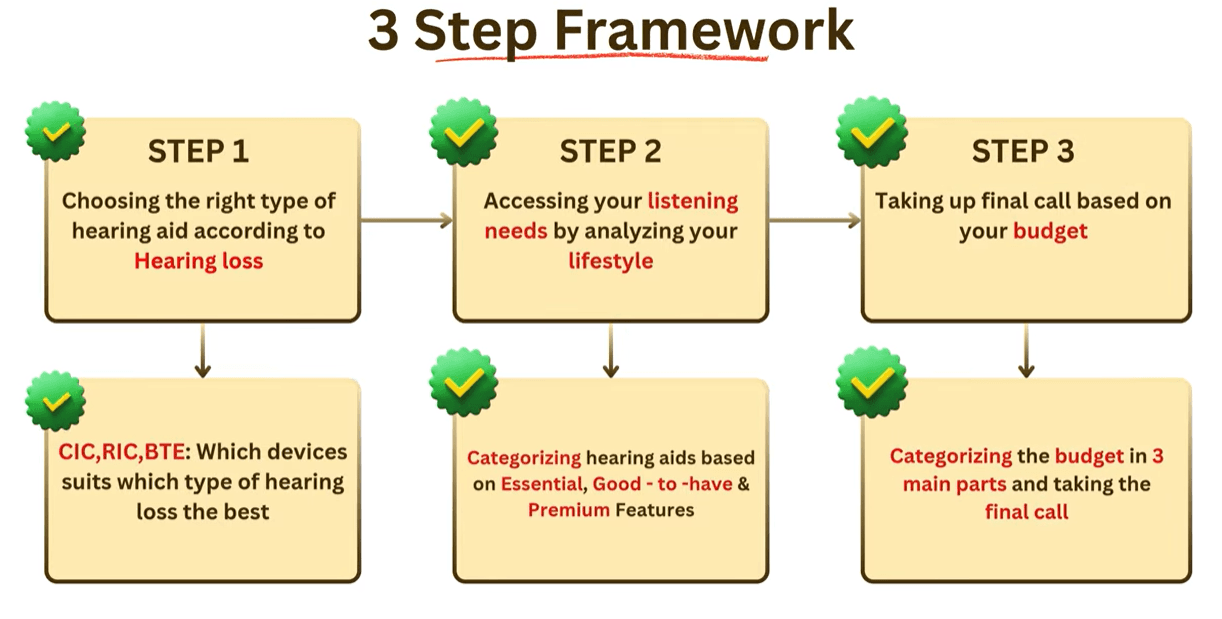
If you need further assistance in choosing the right hearing aid, watch the video -
Choosing the BEST Hearing Aid for Your [HEARING LOSS] | Hearing Aid Selection Simplified [Part 1]